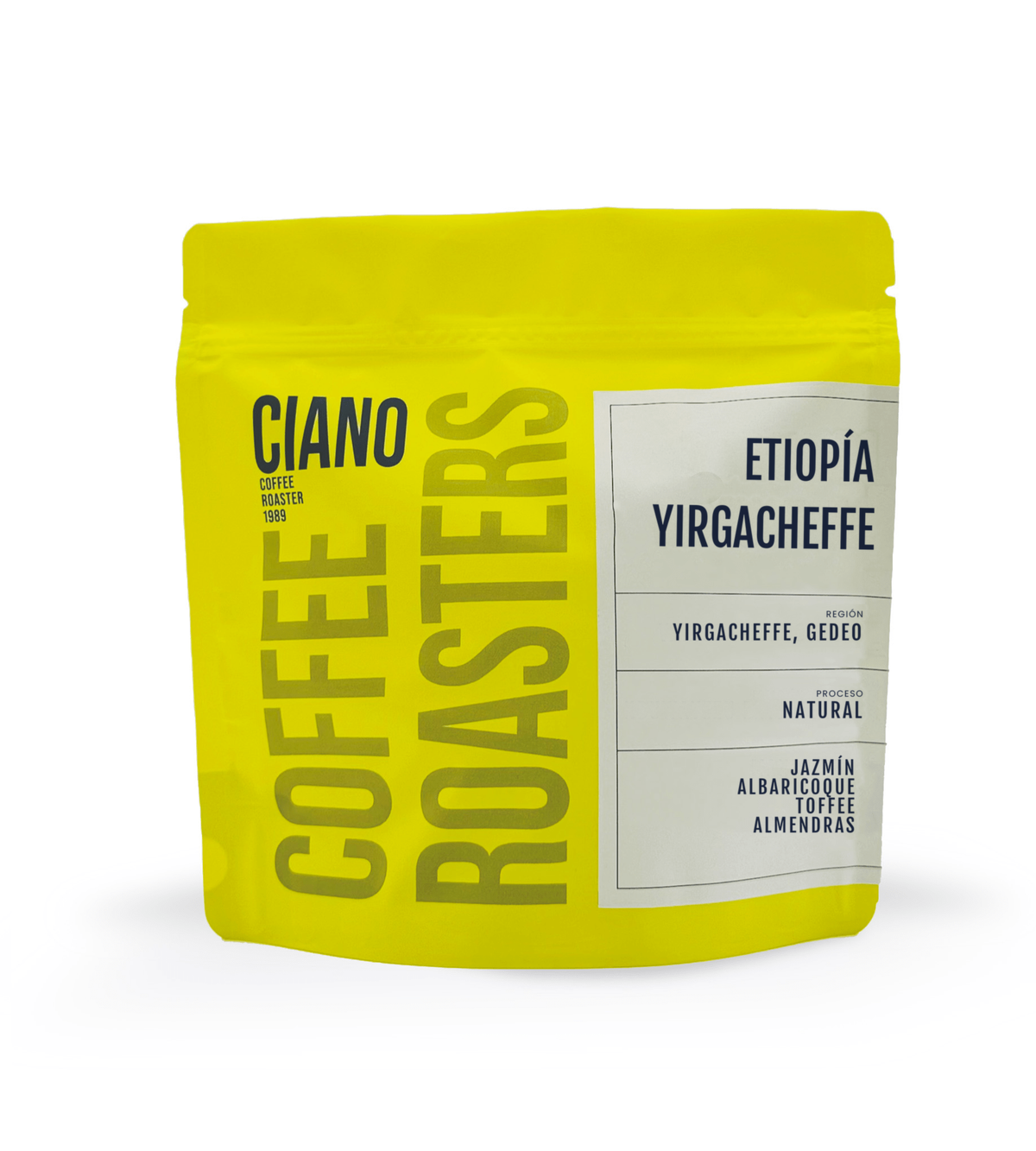
Ethiopia Yirgacheffe
Ethiopia Yirgacheffe · SCA 86 · Jasmine and apricot
Tasting notesJasmine · Apricot · Toffee · Almonds
For you if…You like floral, fruity coffees
- Region
- Yirgacheffe, Gedeo Zone
- Producer
- Smallholders
- Altitude
- 2,200 m
- Process
- Natural
- Profile
- Jasmine and apricot
- Best for
- filter
From 0,33 € per cup (7 g of coffee)
250 g ≈ 35 espressos (7 g) or 16 cups of filter coffee (15 g)
The 1 kg bag saves you 2,50 € compared with four 250 g bags.
Couldn't load pickup availability
- at our roastery in Alcover.
- Roasted at our roastery in Alcover, in small batches.
- Delivery in about 2 working days. We pack it within 24 working hours (mainland Spain; EU delivery times vary by country). Free shipping in mainland Spain from €35, or collect it from our roastery at no cost.
- Whole bean or ground for your coffee maker: moka pot, espresso, filter or French press.
Jasmine and apricot, with a creamy body.
From smallholders in Yirgacheffe, in the Gedeo Zone of southern Ethiopia. Jasmine with apricot liqueur over toffee and toasted almond; medium-high acidity and a lasting, fruity, chocolatey finish. For anyone after flowers and fruit in the cup.
The story
Yirgacheffe is in the Gedeo Zone, in southern Ethiopia. The coffee grows between 1,700 and 2,200 metres. The soil is volcanic and the climate cool and humid. This lot grows at 2,200. In 2023 UNESCO made the Gedeo landscape a World Heritage Site: coffee grows there in the shade of large trees.
Smallholders grow it on family plots, with traditional methods. The plants are native Ethiopian varieties, known in the trade as heirloom.
It is a natural. The harvest runs from November to January. The cherries are floated to remove defective fruit and dried whole, on raised beds or patios, for 12 to 15 days. With the fruit left on, the bean tends to come out sweeter and fruitier. Jasmine and apricot are the importer's cupping notes.
We have it because our specialty range was missing an Ethiopian, and this one scores 86 in that cupping. We roast it in Alcover.
Where it comes from
- Region: Yirgacheffe, Gedeo Zone
- Producer: Smallholders
- Variety: Heirloom
- Altitude: 2,200 m
- Process: Natural, dried for 12 to 15 days
- Score: SCA 86, importer's cupping
For you if…
- You like African coffees, like the Burundi, and want to try a natural.
- You brew it as filter.
How to brew it
- Filter (V60, Chemex) Ideal for this coffee
- 15 g of coffee to 250 g of water (60 g per litre), medium-fine grind and water at 90–96 °C. Wet all the coffee first and let it release its gas. Sour or thin: grind finer. Dry or harsh: grind coarser.
Other methods
- Espresso
- Fine grind. Start from your usual recipe and change one thing at a time: if the shot runs too fast, grind finer; if it barely flows, grind coarser.
- Moka pot
- Medium-fine grind, a little coarser than for espresso. Look for a steady flow and take it off the heat when the coffee stops coming through.
- French press
- Medium-coarse to coarse grind. If the cup tastes flat, go one step finer; if it is harsh or silty, go coarser.
Questions
Whole bean or ground?
If you have a grinder, whole bean: ground coffee loses its aroma sooner. If not, choose the grind for your coffee maker in the options above.
How should I store it?
In an airtight container, somewhere cool and dry, away from direct light, and better out of the fridge. Ideally, buy the coffee you will drink in 2 to 4 weeks.
What does SCA 86 mean?
It is this lot’s score from the importer’s cupping, on the Specialty Coffee Association (SCA) scale, out of 100. From 80 points up, a coffee counts as specialty.